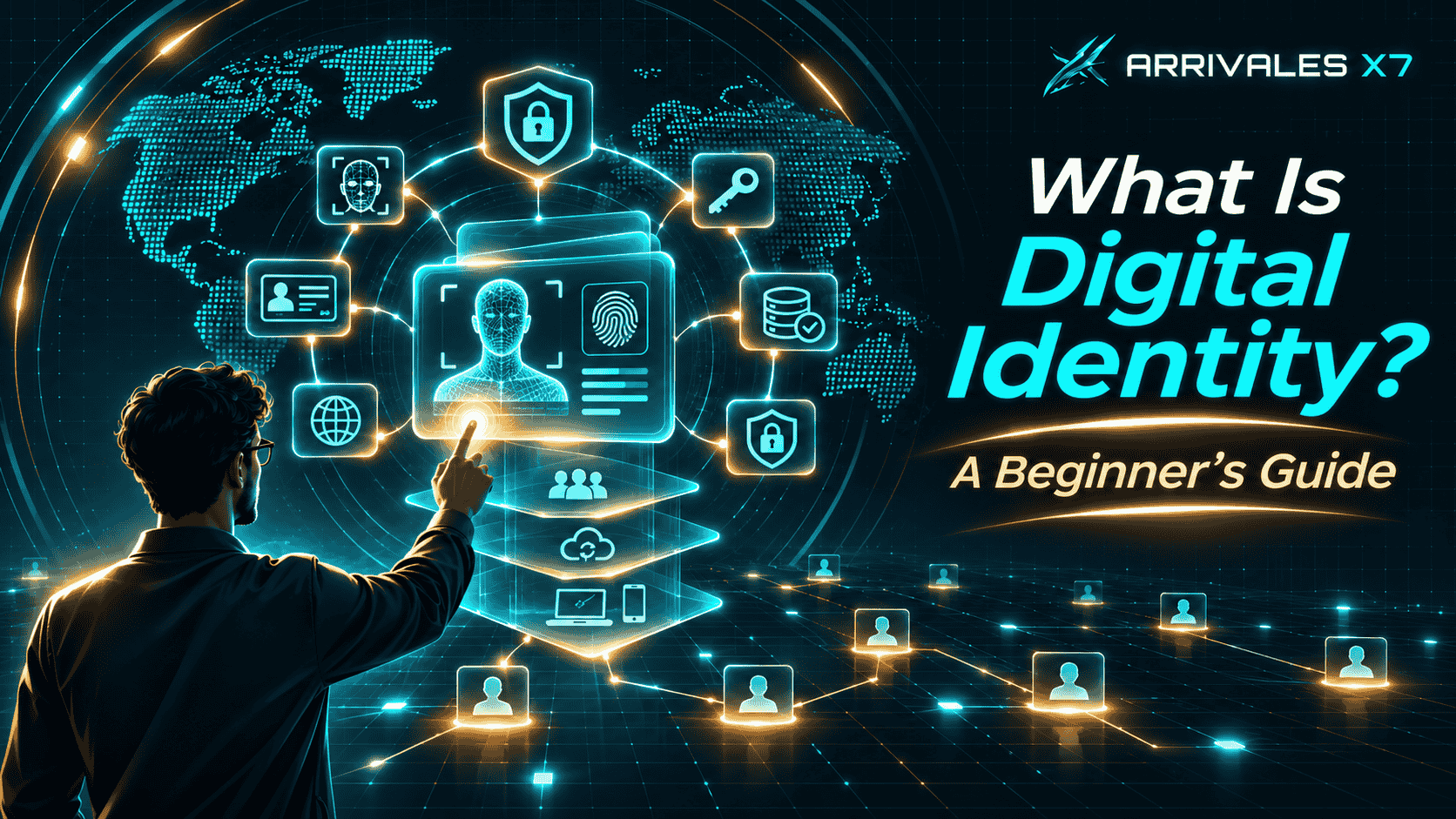
What Is Digital Identity? A Complete Beginner’s Guide
You have more than one identity online, even if you use the same name everywhere. There is the version a visitor sees on your professional profile, the account a service recognizes when you sign in, and the trail of data created through digital activity. These are connected, but they are not the same thing.
That is why the phrase digital identity can mean different things in a conversation about careers, privacy, cybersecurity, or the future of the internet.
This beginner’s guide breaks down the idea into clear examples. You will learn what digital identity is, what it is not, why it matters, and how to make yours more accurate and secure without exposing more information than necessary.
Digital identity, explained simply
Digital identity is the set of information, identifiers, attributes, and digital representations associated with a person or organization in online systems. Depending on the context, it can refer to a public-facing profile, an account used to sign in, or the verified information that a service uses to distinguish one user from another.
Think about a freelance photographer:
- A public portfolio displays a name, specialty, photos, and contact route.
- A website account recognizes the photographer’s sign-in credentials.
- A payment or identity-verification service may ask for specific information to confirm identity.
- Search results and social mentions create additional context others may associate with the same person.
All of these relate to identity online, but they operate for different purposes and with different privacy expectations.
The important question is not “Do I have a digital identity?” You almost certainly interact with digital identity systems if you use modern online accounts. The more useful question is, “Which part of my digital identity am I trying to understand or manage?”
The three practical sides of digital identity
1. Public identity: how people recognize you
This includes information you deliberately make visible: your professional name, profile photograph, biography, portfolio, organization name, or public links.
Public identity helps people answer, “Who is this, and what do they do?” It should be clear and accurate, but it does not need to reveal sensitive personal details.
2. Account identity: how a service recognizes your account
When you sign in to an app, the service must distinguish your account from another user’s. A username, account identifier, credential, and authentication process can be involved.
An email address used to log in is not automatically the same thing as a publicly displayed email address. Account information and public profile information are separate choices in many systems.
3. Verified identity: how certain services establish who you are
Some services need higher confidence that a person is who they claim to be. Examples include regulated financial services or government-related identity processes, depending on local rules and the specific service.
In these contexts, identity proofing and authentication are technical disciplines. The U.S. National Institute of Standards and Technology’s Digital Identity Guidelines address identity proofing, authentication, and federation; that technical use of the term is narrower and more security-focused than everyday discussions of personal branding.
These three categories are helpful ways to think about digital identity, not a universal classification imposed by every provider.
Digital identity vs. digital footprint vs. online presence
These terms are often used interchangeably, but distinguishing them makes decision-making easier.
| Term | What it means in practice | Example |
|---|---|---|
| Digital identity | Information and representations associated with a person or organization online. | Professional name, profile details, or account identifiers. |
| Digital footprint | Traces of activity and information generated or left online, intentionally or incidentally. | Comments, public posts, or certain browsing and account records. |
| Online presence | Publicly accessible pages, content, and channels through which someone can discover you. | Website, portfolio, public directory listing, or articles. |
| Online reputation | The impressions and judgments people form from information they encounter. | What a client concludes after reading a profile and reviews. |
A useful example: your public portfolio is part of your online presence; the name and attributes on it contribute to your public digital identity; a comment you leave elsewhere can become part of your digital footprint; and how people interpret these things affects your reputation.
For a practical plan to establish public touchpoints, see How to Build an Online Presence From Scratch.
Why digital identity matters in everyday life
It helps people know they have reached the right person
If you have a common name, clear professional details can help visitors distinguish your profile from someone else’s. Consistent naming and accurate descriptions reduce confusion. They do not amount to legal identity verification.
It shapes first impressions
A public profile may be a potential collaborator’s first introduction to you. Outdated information, broken links, and contradictory descriptions can make it harder to understand your work.
It affects account security
Your identity inside an app can be targeted through phishing, stolen credentials, or impersonation. Public identity and account security require different protections, but both deserve attention.
It influences privacy choices
Every public detail should have a purpose. Revealing your workplace, home address, personal phone number, or identifying documents may create risks without adding meaningful value to a professional profile.
It helps organizations establish continuity
A business can use a consistent public name, verified contact channels, and accurate profiles to make its identity recognizable across different touchpoints. An organization’s digital identity is not simply the sum of its employees’ social accounts.
Real examples of digital identity
For a student: a professional profile and portfolio can show projects and areas of interest, while university sign-in credentials serve a different, account-specific role.
For a freelancer: a public website might connect published work, service descriptions, and a recognizable professional name.
For a small company: a business website and correctly maintained public pages help customers recognize the organization. Secure staff logins are part of its operational identity infrastructure, not its marketing presence.
For an online community: member handles and public profiles can distinguish participants inside a platform. They do not necessarily prove someone’s legal identity.
For a service requiring verification: a user may be asked to provide information or credentials to establish identity under the service’s rules. This is a different situation from writing a public biography.
How to create a clear public digital identity
You do not need an elaborate personal brand to get the fundamentals right.
Start with a truthful description
Write your professional name or organization name as you want it publicly represented, then add a concise line about what you do. Avoid titles, qualifications, partnerships, or claims you cannot substantiate.
Choose a consistent visual cue
A recognizable photograph, symbol, or logo can help people connect your pages, but it should not replace the basic text that identifies you.
Link to a primary point of reference
An up-to-date public page, portfolio, or professional profile gives people a destination where they can verify details and learn more.
Decide what stays private
A public profile rarely needs government ID numbers, a private address, personal account recovery information, or confidential customer details.
Keep your information current
Review your public pages when your role, services, or official contact methods change. A strong public identity is maintained, not just created once.
How to protect your digital identity
Your public profile tells people what you choose to show. Security controls help protect the accounts and sensitive information behind it.
Use these practical habits:
- Secure important accounts. Use unique strong passwords or passkeys and enable multi-factor authentication where available.
- Watch for impersonation. If someone copies your identity or claims to be you, collect evidence and report it through the service’s official process.
- Review account recovery settings. Outdated recovery methods can make it harder to regain access.
- Limit unnecessary public data. Share the least sensitive information needed to accomplish your purpose.
- Check what appears in search. Review public results for your name and correct information you control.
- Review third-party permissions. Remove access for services you no longer use when appropriate.
If you want to investigate your presence in Google Search and account activity, see What Does Google Know About You?.
Does digital identity mean you own your data or online space?
Not automatically. Having a profile, account, username, or slot on a platform does not by itself establish legal ownership of the platform, an investment asset, or all data associated with that identity. What rights you hold depends on applicable law, the service’s terms, and the specific product.
This distinction matters as the internet develops new forms of profiles, virtual spaces, credentials, and digital participation. A platform can offer a meaningful experience without offering property ownership or financial returns.
A useful checklist before joining any service is: What exactly am I registering or reserving? What rights does that provide? Which parts are public? What can I edit or remove? What does the platform actually promise?
The future of digital identity: more choice, more responsibility
Identity systems are evolving alongside passkeys, digital credentials, online communities, and AI tools. Different approaches can improve convenience or security, but new technology does not eliminate the need for consent, accurate information, and clear expectations.
For public identity, one opportunity is to choose how and where you participate in digital spaces rather than treating every online interaction as a temporary post. ArrivalesX7, for example, is a digital map made up of sectors and slots. As its About page explains, you pick one or more available tiles on the map, complete a single booking, and get a public profile that lives behind your image.
That is one way to think about having a place within a particular digital platform. It should not be confused with verified legal identity, an identity-document service, or a promise of search traffic.
Interested in representing your identity in a different digital space? Explore ArrivalesX7 and review the available slots.
Frequently asked questions
What is digital identity in simple words?
It is the information and representations associated with you or an organization in digital systems, including public profiles and the account identifiers used by online services.
Is digital identity the same as a social media account?
No. A social media account can contribute to your digital identity, but identity also includes other profiles, credentials, and representations across services.
What is an example of a digital identity?
A professional profile showing your name and work is a public example. A service’s authenticated user account is another example in a different context.
Can someone steal my digital identity?
People can misuse stolen credentials or impersonate others online. The exact risks vary; account security controls and official reporting processes can help reduce harm.
Can I have several digital identities?
You can have different digital representations and accounts for different contexts. They may or may not use the same name, and they may have different privacy or verification requirements.
Is digital identity the same as digital ownership?
No. Identity concerns representation or identification. Ownership and contractual rights are separate questions determined by law and service terms.
The takeaway
Digital identity is not just a profile picture, a password, or what appears when someone searches your name. It spans public representation, account recognition, and, in some contexts, formal verification. Understanding which layer you are managing helps you make better decisions about visibility, credibility, and privacy. Build the parts you can control, protect the parts that should stay private, and evaluate each new digital space for what it genuinely offers.