
Cristiano Ronaldo Personal Brand: 5 Powerful Lessons
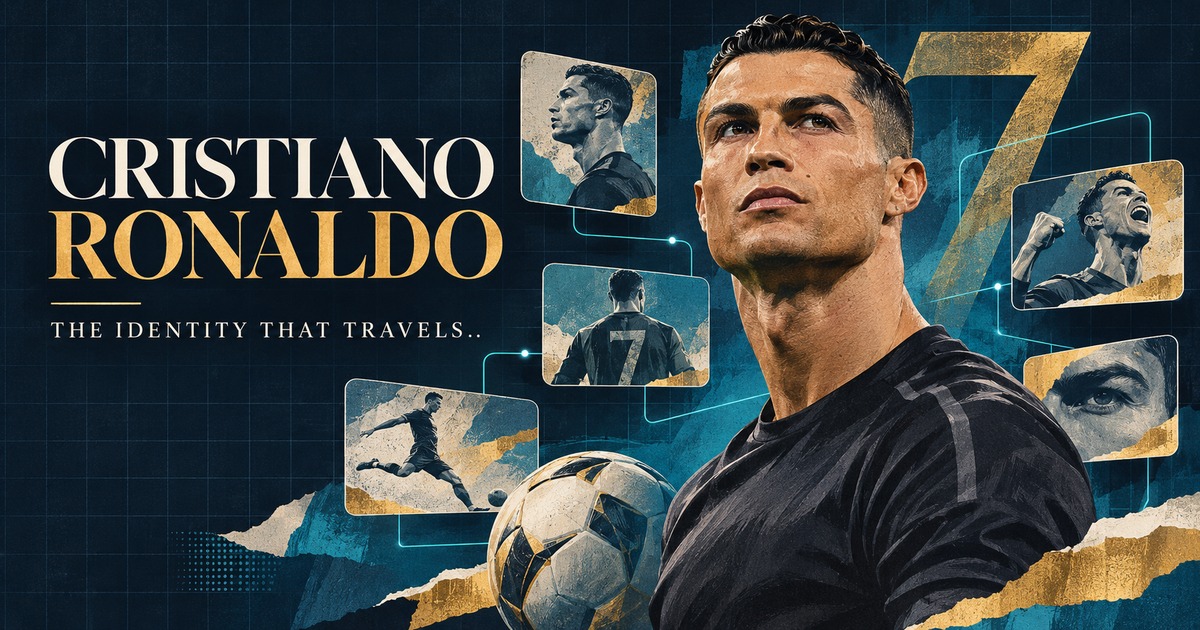
The Cristiano Ronaldo personal brand case is recognizable across sporting contexts because an identifiable name connects to an extensive record of work. The useful lesson for a creator or business is the relationship between evidence and identity: a memorable symbol becomes more meaningful when people can trace it to achievements they understand.
On this page
- Begin with a record that has a defined scope
- The three destinations behind a famous name
- What Cristiano Ronaldo personal brand teaches about consistency
- An evidence test for your own public presence
- Ronaldo’s independent fan page on ArrivalesX7
- 5 powerful lessons from the Cristiano Ronaldo personal brand case
- Apply the Cristiano Ronaldo case to a consultant portfolio
- Cristiano Ronaldo lessons for reviewing a public profile
- Questions about recognition and official accounts
- Continue with a practical guide
Recognition also needs context. A highlight, a product page and an independent fan profile perform different jobs. Treating them as interchangeable can turn a familiar name into a confusing collection of claims. This article examines how to keep those routes clear.
Begin with a record that has a defined scope
In its 27 August 2024 announcement of a Champions League award, UEFA recorded Ronaldo’s 140 goals in 183 appearances in the competition and five title wins. The date and competition are essential parts of those figures. They should not be relabeled as a current total across all football.
The documented record also spans Manchester United, Real Madrid and Juventus. That makes it a useful example of continuity through organizational change. The achievements belong to particular seasons and teams, while the player’s public name connects the chapters.
Our interpretation is that this connection gives recognition depth. A viewer can move from a familiar image to a specific body of evidence. For a smaller professional, that body might be a portfolio, published research or a clearly documented project history.
The three destinations behind a famous name
Ronaldo’s official website provides a reference destination for his public identity. Independent coverage and fan pages occupy other parts of the web. The following editorial framework separates their roles without assuming that every visitor takes the same path.
| Destination | What a reader should be able to establish | What it cannot establish by itself |
|---|---|---|
| Sporting record from the competition organizer | The scope, date and definition of an achievement | Every aspect of the athlete’s life or reputation |
| An official public destination | Where the subject directs visitors for its own information | Independent confirmation of every promotional claim |
| An independent fan or editorial page | The page’s purpose, sources and operator’s relationship to the subject | That the athlete controls or endorses the page |
This distinction matters more as a name becomes familiar. Familiarity can make readers less likely to examine a URL or a page label. A responsible publisher makes the relationship explicit before asking the reader to interpret the content.
What Cristiano Ronaldo personal brand teaches about consistency
Consistency does not require identical presentation on every platform. A sporting biography and a short video have different constraints. They can still share an accurate name, recognizable subject and clear route to further information.
The practical design problem is deciding what remains stable. For a consultant, that could be a professional name, a concise specialty and a maintained portfolio address. For a business, it could be the public trading identity and a reliable contact route. Individual campaigns can change while those reference points remain usable.
There is a limit to the analogy. An elite football career receives distribution from competitions, clubs and broadcasters that an ordinary business does not have. A professional cannot reproduce that system by choosing a distinctive number or visual style. The transferable principle is the connection between identity and verifiable work.
An evidence test for your own public presence
Choose one claim you want people to remember. Then open your profile as a stranger and ask what supports it. If you say you specialize in restaurant design, show relevant work with permission. If you describe a project outcome, give its scope and time period. A claim that a visitor can examine is more useful than a broad superlative.
Next, follow the links between your public pages. Do they identify the same person or organization? Does an old profile point to a current destination? Can someone distinguish your own page from a reseller, fan account or unrelated namesake? These checks address identity continuity without relying on a follower target.
For a Gulf business working with international clients, the same exercise can be repeated in the languages it actually serves. Check whether the English and Arabic descriptions identify the same services and contact route. A consistent public identity should survive the handoff between them.
Ronaldo’s independent fan page on ArrivalesX7
ArrivalesX7 currently displays a Cristiano Ronaldo page at @cristiano. Its visible description identifies it as an independent, unofficial fan page. The link is included as a relevant on-platform reference. It is not evidence that Ronaldo owns the account, has reserved a position himself or endorses ArrivalesX7.
This provides a useful practical distinction between representation and authentication. A public page can discuss a person and direct readers to authentic sources. Its existence alone does not verify control by that person. The same rule applies to independent pages about businesses, artists and other public figures.
If this case prompts a review of your own presence, use the digital identity guide to distinguish a public profile from account verification. Then visit the ArrivalesX7 arena and assess how accurately a profile could represent your work.
5 powerful lessons from the Cristiano Ronaldo personal brand case
1. Attach an achievement to its source and scope
The Cristiano Ronaldo personal brand case begins with work that readers can place in a defined setting. When using a competition statistic, keep the competition name and reporting date beside the figure. When adapting the principle to your own business, describe the project, your responsibility and the period covered. A visitor should not need to guess whether a claim concerns one assignment or an entire career.
Cristiano Ronaldo provides a prominent example, but a small portfolio can use the same discipline. A designer can state which part of a renovation they delivered. A consultant can explain what a published case study actually measured. The useful connection is between recognition and evidence that supports a specific statement.
2. Make the reference destination easy to recognize
A familiar name can appear on official websites, news reports and independent pages. Give readers a clear route to the destination controlled by the person or organization when that control can be established. Explain the role of other pages before asking readers to rely on them. A familiar username alone does not tell a visitor who operates the account.
In the Cristiano Ronaldo personal brand comparison, the official website and the ArrivalesX7 fan page serve different purposes. The distinction should remain visible in the article and in any surrounding promotional copy. For an ordinary professional, the equivalent is a maintained business page that agrees with the contact information and attribution used elsewhere.
3. Carry identity across changes without erasing history
The UEFA record discussed above spans several clubs. That makes Cristiano Ronaldo useful for examining how a public name connects work completed in different organizations. A visitor can understand continuity while still seeing the context of each achievement. The publishing lesson is to preserve the relationship between the person, their role and the organization involved.
When changing employers or business names, review old biographies and portfolio pages. Keep the dates and credits accurate, then explain the current contact route. Do not silently turn a former employer’s work into a claim about a new company. Clear continuity helps a reader understand development without losing the facts of the earlier chapter.
4. Use recognizable design to support useful information
Visual consistency can help a visitor connect two encounters, but the information still has to explain why the connection matters. The Cristiano Ronaldo personal brand case should not be reduced to copying a number, pose or color combination. Those elements exist within a sporting career and a much larger distribution system.
Choose a small set of practical constants for your own identity: the public name, a clear photograph or mark, a concise description and a dependable destination. Let individual projects use the presentation they need. A portfolio can remain recognizable even when one case study concerns a restaurant and another concerns an office, provided the authorship and role are clear.
5. Treat an independent profile as representation
An independent page can help readers find context, but its existence does not demonstrate ownership by the subject. This is particularly important when discussing Cristiano Ronaldo on another platform. The page operator’s relationship should be stated in ordinary language where the reader encounters the link, rather than hidden in a distant footer.
Apply the same rule to your business ecosystem. Identify a distributor as a distributor, a partner as a partner and an independently written profile as editorial coverage. If a relationship changes, update the description. A clear label gives the reader a fair basis for interpreting what the page can establish and where further confirmation belongs.
Apply the Cristiano Ronaldo case to a consultant portfolio
Imagine a hypothetical consultant who completed projects through two employers before opening an independent practice. A new visitor sees a familiar project image but does not know which company delivered it. The consultant creates a case-study page stating the year, the employer at the time, the consultant’s actual responsibility and the material they have permission to show.
The current business profile links to that case study with a precise label. An older professional profile identifies the former role and points to the current destination without changing the historical credit. The consultant checks the English and Arabic versions together so that a supporting role does not become a claim of sole delivery during translation.
This exercise uses the Cristiano Ronaldo personal brand example to improve attribution, not to predict a comparable level of fame. The evidence is useful because a prospective client can examine relevant work and understand who did what. If a result cannot be documented or shared, the consultant narrows the claim instead of filling the gap with a superlative.
Cristiano Ronaldo lessons for reviewing a public profile
Read the profile without the surrounding social feed. Can a stranger identify the person, the current organization and one relevant body of work? Follow the contact link and check that it reaches the intended destination. Then open one older example and look for dates, credits and a clear explanation of the role.
The Cristiano Ronaldo case also suggests a useful question for anyone maintaining third-party pages: could a reader mistake this page for an official account? If so, improve the label and the source links. That correction makes the representation more useful without claiming that the subject operates or endorses it.
Questions about recognition and official accounts
Does a familiar username prove an account is official?
No. Examine the page’s label, supporting information and links from authentic destinations. A recognizable name is a reason to check the relationship, rather than a substitute for that check.
Is a large audience necessary for a coherent personal brand?
No. A small professional presence can be coherent when its identity, evidence and contact routes agree. Audience size and identity clarity answer different questions.
What is transferable from the Cristiano Ronaldo personal brand case?
The practical lesson is to connect an identifiable public name with evidence that has a clear scope and source. Cristiano Ronaldo’s sporting distribution is exceptional, while the information task is accessible to a smaller professional. A maintained portfolio can explain a role, a project and a current destination without making a comparable fame claim.
Is the linked Cristiano Ronaldo page an official celebrity account?
The ArrivalesX7 page checked for this article labels itself as an independent, unofficial fan page. Its presence does not prove that Cristiano Ronaldo controls it, reserved a position or endorses the platform. Readers should use the clearly identified official destinations when they need information issued by the subject.
What belongs beside an achievement in a short biography?
Keep enough context to identify the achievement and understand its boundary. That may include the organization, period, role and a useful source link. The Cristiano Ronaldo comparison works because the sporting evidence has a defined setting. An ordinary business should preserve equivalent context even when the biography itself must remain brief.
Continue with a practical guide
 |  |
Use the Cristiano Ronaldo case study to review one part of your own public presence. Then visit ArrivalesX7, explore the available sectors and choose the place that fits the identity you want to represent.